
Osmosis Decision-Making Trees
Learn to think like a clinician — not just memorize facts
Cut through the noise. With Osmosis decision-making trees, you’ll gain clear, visual pathways from patient presentation to diagnosis to management. Helping you navigate clinical care with confidence.
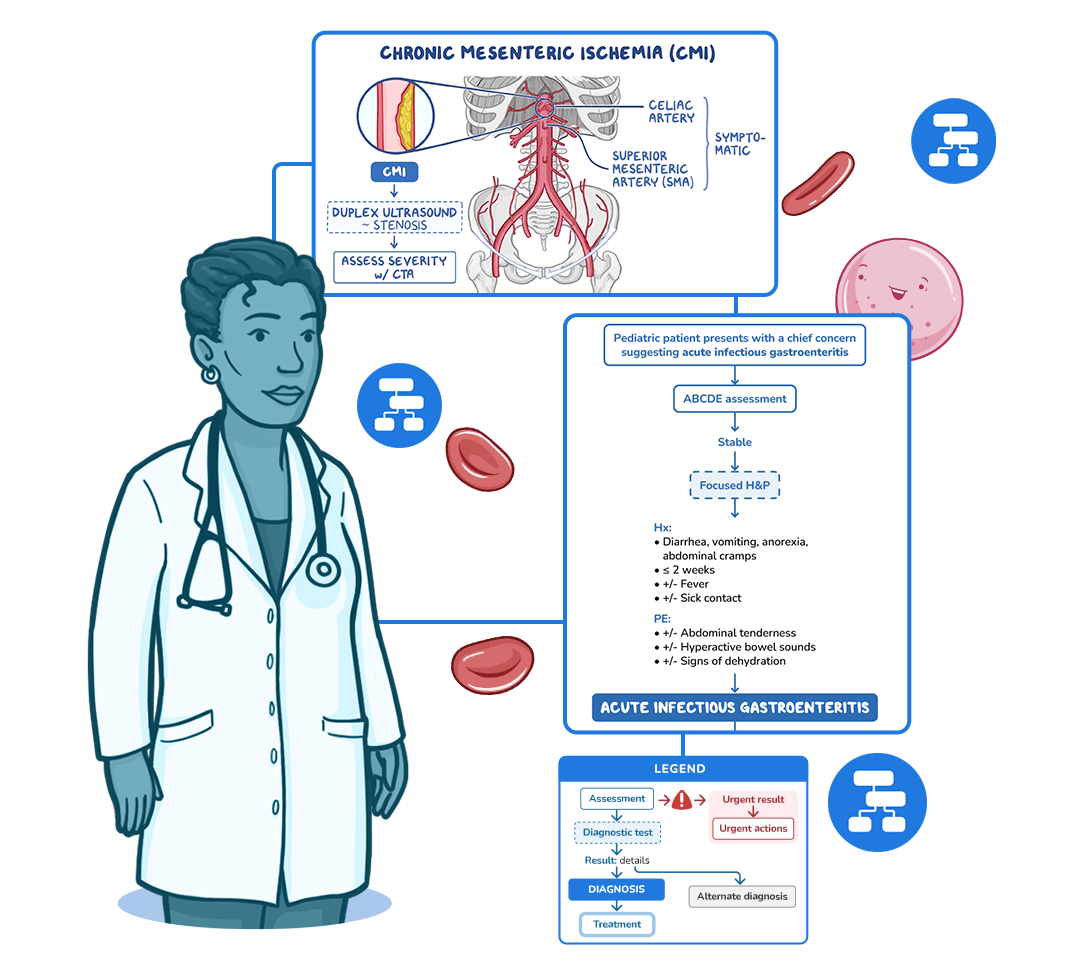
The flowcharts you’ll want to use in clinic
Designed for real-world problem solving, not rote memorization.
Gets straight to the point
Our decision-making trees (DMTs) are streamlined, evidence-based flowcharts that guide you through the next steps in diagnosis and patient management.

Learn clinically, not just conceptually: Built for first-time clinical learners and core medical clerkship rotations
Review anytime, anywhere: Available both online and via the mobile app for quick refreshers on the go
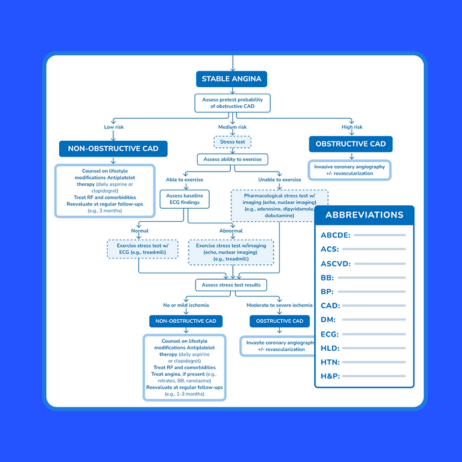
Study with structure
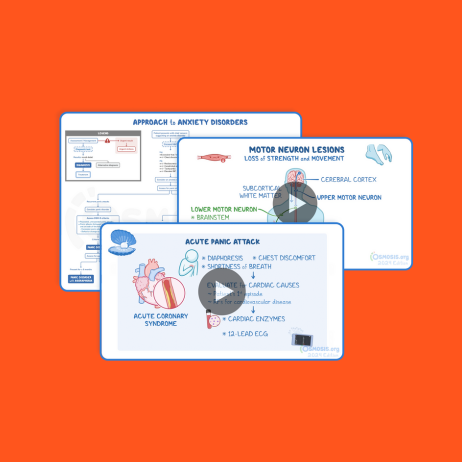
Each decision-making tree (DMT) is paired with videos, assessments, and other tools that tie together to form a cohesive learning path.
Stay focused: Topics follow the logic of history → exam → differential → workup → management
Reinforce your learning: Every decision-making tree is supported by a video and board-style questions to help you apply your knowledge
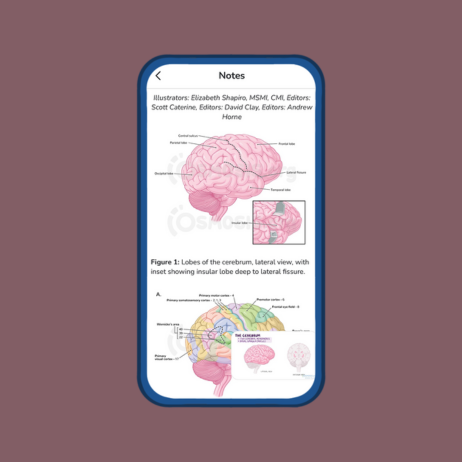
Make it your own
Control your learning, on-the-go, and with the tools you’ll actually want to use.
Save what matters: Bookmark, annotate, and revisit key decision trees when you need them
Study anywhere: Access Osmosis decision-making trees (DMTs), videos, and questions on desktop, tablet, or phone — even offline
8M+ students have gone
from overwhelmed to
organized
“
Love watching and learning from the Clinical Sciences videos, especially along with the decision-making trees. They really helped with my final oral examinations.

John Ephrath Thathapudi
MD student
“
I love the videos, notes, and decision-making flowcharts [trees] which help me to understand the concept much better. The Clinical Sciences library is one of the best ways to review concepts.

Sathya Vijayakumar
PA student
Get more A’s to your Q’s.
What are clinical decision-making algorithms?
Clinical decision-making algorithms, also known as decision-making trees, are structured diagnostic or treatment flowcharts that guide medical reasoning. Osmosis decision-making trees help learners practice these clinical reasoning pathways.
How do flowcharts improve clinical reasoning?
Flowcharts improve clinical reasoning by organizing symptoms, tests, and treatment options into logical pathways. Osmosis decision-making trees help learners apply step-by-step diagnostic thinking.
Are diagnostic algorithms helpful for USMLE exams?
Diagnostic algorithms are helpful for exams such as USMLE Step 1 or 2 because these exams test clinical reasoning and next-best-step decision making. Osmosis decision-making trees support this style of learning.
How can I learn to think clinically for board exams?
Clinical thinking for board exams develops through case-based practice, reviewing diagnostic algorithms, and reinforcing foundational knowledge. Osmosis learning tools combine videos, quizzes, and clinical reasoning exercises to support the development of clinical reasoning.
Do decision trees improve test (exam) performance?
Decision trees can improve test performance by helping learners practice quickly identifying key findings, narrowing differential diagnoses, and choosing appropriate management steps.