
Labia Minora

What Is It, Location, and More

Author: Anna Hernández, MD
Editor: Alyssa Haag
Editor: Emily Miao, PharmD
Illustrator: Jessica Reynolds, MS
Copyeditor: David G. Walker
Modified: Jan 06, 2025

What are the labia minora?

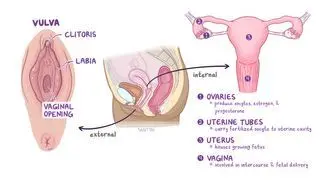
The labia minora are the two inner folds of skin that surround the opening of the vagina. The labia minora are part of the external female genitals, or genitals present in individuals assigned females at birth, which also includes the mons pubis, labia majora, vaginal opening, hymen, and clitoris
An infographic detailing the causes, signs and symptoms, diagnosis, and treatment of Labia Minora

Where are the labia minora located?

The labia minora are located under the labia majora, which extend downward from the mons pubis. The space between the two labia minora is known as the vestibule, which is mainly occupied by the vaginal opening, or the vaginal introitus. In individuals who have not yet had sexual intercourse, the introitus is typically covered by a membrane of connective tissue known as the hymen. This tissue is often torn during the first coitus. However, it can also be broken by a sudden fall; by insertion of a vaginal tampon; or by participation in various sports, such as horseback riding and cycling. In some individuals, the hymen can persist even after coitus, especially if the tissue is flexible. Therefore, the presence or absence of a hymen is not a reliable indicator of sexual experience.

At the anterior junction of the two labia minora lies the clitoris, which sits above the urethral orifice and at the lower border of the pubic bone. The clitoris is a highly sensitive area that is partially covered by the clitoral hood, similar to the prepuce covering the glans of the penis. Posteriorly, the labia minora meet together in an area called the frenulum, or fourchette, which is a fold of skin at the bottom of the vaginal opening designed to stretch during vaginal intercourse and childbirth

What causes the labia minora to stick out?

The size and shape of the labia minora are unique to each individual and can vary throughout a person’s life. In some individuals, a condition known as labia minora hypertrophy can occur in which the labia minora can become enlarged and stick out beyond the labia majora. Although the exact cause of labia minora hypertrophy is not entirely understood, research shows both genetics and other factors, like hormonal activity (e.g., estrogen), may play a role in its development. Hypertrophy of one or both labia minora can sometimes result in vulvar discomfort and personal concern about the appearance of the vulva. It may also interfere with daily activities, such as sitting or walking, sexual intercourse, and sports. In addition, it can lead to chronic irritation, pain, and an increased likelihood of vulvar infections. Most often, concerns regarding the appearance of the labia minora can be relieved by reassuring individuals that variation in size and shape of the labia minora is natural. In some cases, though, these concerns can cause significant emotional and psychological distress, so individuals may be referred to a mental health specialist for counseling and screening for body dysmorphic disorders. If concerns persist after counseling and appropriate vulvar care, then surgery may be offered.

What is the function of the labia minora?

The labia minora serves to protect the vaginal and urethral openings from mechanical irritation, dryness, and infections. During sexual stimulation, the labia minora contributes to the arousal of the whole vestibule area and clitoris by spreading lubrication from the glands located in the vagina and around it (e.g., Bartholin glands). This helps facilitate more painless and pleasurable vaginal intercourse

Many sebaceous, or oil-producing, glands are also present in the labia minora and extend to the skin surface via ducts. Sebum, or oil, produced by the sebaceous glands coats the surface of the labia minora to lubricate and protect the underlying tissues. In older individuals, or in those who have low estrogen levels, the skin of the labia minora becomes thinner and loses surface moisture, which can cause vaginal dryness and pain with sexual intercourse.

What are the most important facts to know about the labia minora?

The labia minora are the two inner skin folds that surround the opening of the vagina. Their main function is to protect the vaginal and urethral openings from mechanical irritation, dryness, and infections. They also contribute to the lubrication and sexual stimulation of the vestibule and clitoris during vaginal intercourse

References


Drake, R., Vogl, A. W., & Mitchell, A. (2019). Gray’s anatomy for students: With student consult online access (4th ed.). Philadelphia, PA: Elsevier.


Hansen, J.T. (2018). Netter's clinical anatomy (4th ed.). Philadelphia, PA: Elsevier.


Jones, R. E., & Lopez, K. H. (2014). The Female Reproductive System. In Human reproductive biology (4th ed., 23-50). DOI: 10.1016/b978-0-12-382184-3.00002-7 


Laufer, M. R. & Reddy, J. (2022). Labia minora hypertrophy. In UpToDate. Retrieved January 12, 2022, from https://www.uptodate.com/contents/labia-minora-hypertrophy


Nguyen, J.D., & Duong, H. (2021). Anatomy, Abdomen and Pelvis, Female External Genitalia. In StatPearls. Retrieved from https://www.ncbi.nlm.nih.gov/books/NBK547703/